Belgrade is a city where history, faith, and culture intertwine. For centuries, Orthodox churches in Belgrade have stood as witnesses to wars, rebirth, and national identity. From medieval sanctuaries to monumental modern temples, these sacred places attract believers, historians, and visitors from around the world.
Below is an overview of the most important Orthodox churches in Belgrade, each with its own story and spiritual significance.
Ružica Church – A Church Forged Through War
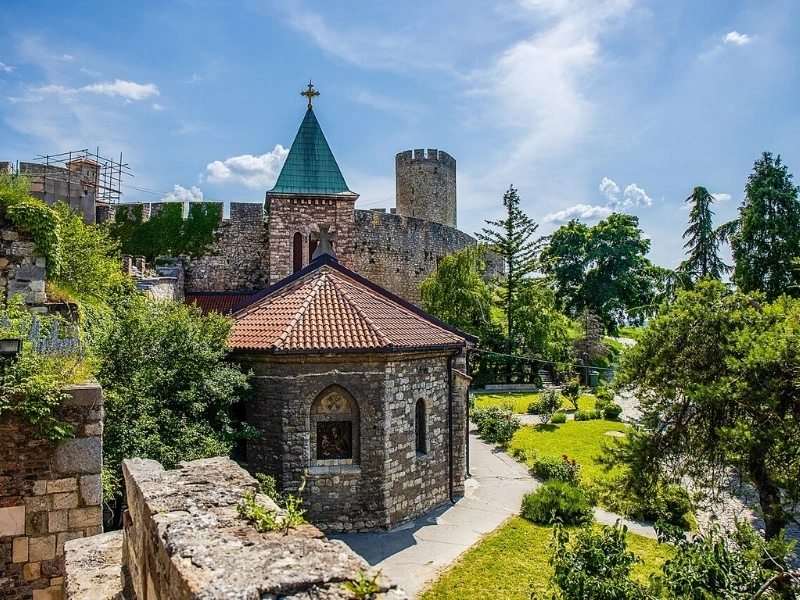
Ružica Church, located inside the Belgrade Fortress (Kalemegdan), is one of the oldest churches in the city. Its origins date back to the medieval period, though the church was destroyed and rebuilt several times due to wars and invasions.
What makes Ružica Church unique is its deep connection to Serbian military history. After World War I, it was restored using materials from weapons and ammunition. Inside, visitors can see chandeliers made from swords and bullets, symbolizing sacrifice and resilience. Today, Ružica Church stands as a powerful symbol of faith, survival, and national memory.
Cathedral Church of Saint Michael the Archangel – The Heart of Serbian Orthodoxy
The Cathedral Church of Saint Michael the Archangel, also known as Belgrade Cathedral, is one of the most important religious buildings in Serbia. Built in the 19th century, it played a central role in the spiritual and political life of the Serbian people.
The cathedral houses the relics of major Serbian saints and leaders, including Vuk Karadžić and Dositej Obradović. Its elegant iconostasis, classical architecture, and historical importance make it a must-see landmark in Belgrade’s old town.
St. Alexander Nevsky Serbian Orthodox Church – A Symbol of Slavic Brotherhood
The Church of St. Alexander Nevsky is dedicated to the Russian saint and medieval prince, reflecting the strong spiritual and cultural ties between the Serbian and Russian people.
Built in the early 20th century, this church features traditional Serbian-Byzantine architecture with richly decorated interiors. It is located near Dorćol, one of Belgrade’s oldest neighborhoods, and remains an active parish church known for its peaceful atmosphere and historical significance.
St. Mark Orthodox Church – Monumental Beauty in Tašmajdan Park
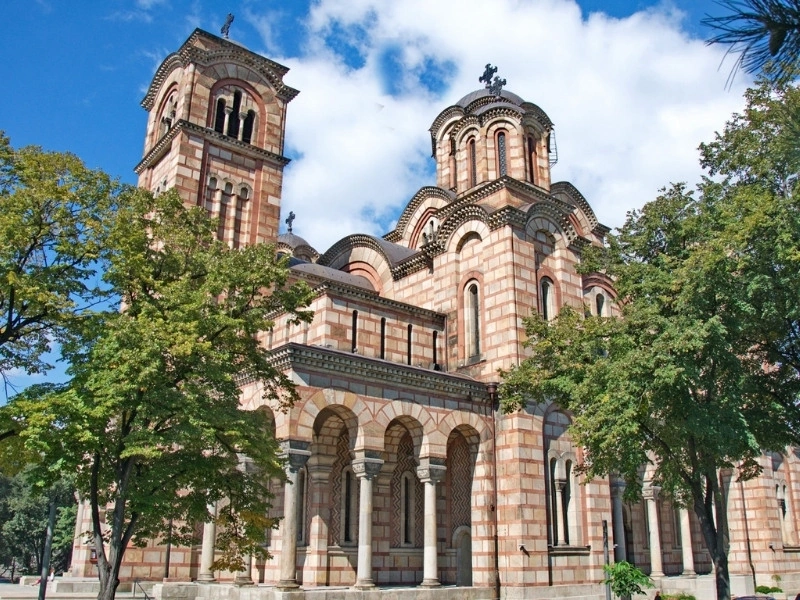
St. Mark’s Church is one of the largest Orthodox churches in Serbia. Inspired by the medieval Gračanica Monastery, it was built in the 20th century and dominates the landscape of Tašmajdan Park.
Inside the church lies the tomb of Emperor Dušan, one of the most powerful rulers in Serbian history. The massive stone structure, impressive frescoes, and spiritual importance make St. Mark’s Church one of Belgrade’s most striking religious monuments.
Orthodox Church of the Ascension – Faith in the City Center
The Orthodox Church of the Ascension (Crkva Vaznesenja Gospodnjeg) is located in the heart of Belgrade and has long been associated with key moments in Serbian national history.
Built in the 19th century, it is closely connected with the Serbian struggle for independence. Despite its modest exterior compared to larger churches, the Church of the Ascension holds immense historical and spiritual value and continues to serve the local Orthodox community.
Church of Saint Sava – The Largest Orthodox Church in the Balkans
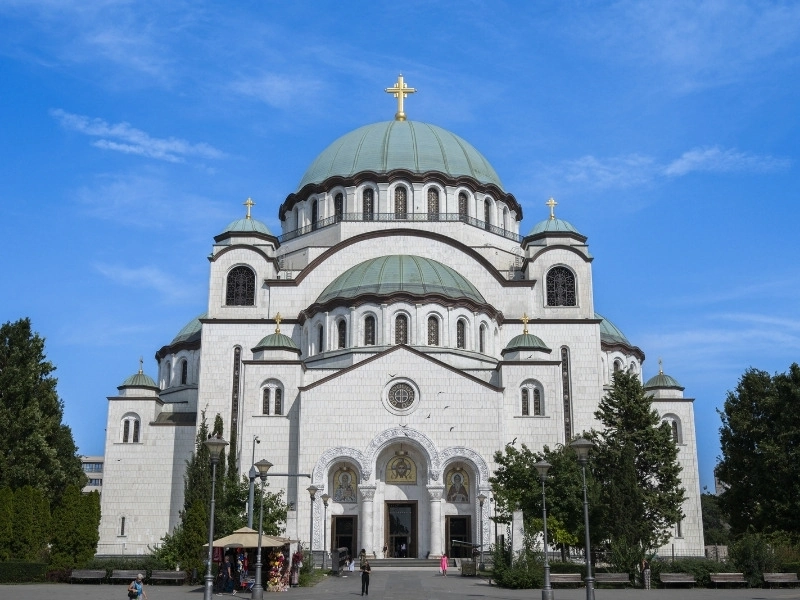
The Church of Saint Sava is the most iconic religious landmark in Belgrade and one of the largest Orthodox churches in the world. Built on the site where the relics of Saint Sava were burned during Ottoman rule, the church symbolizes faith, endurance, and national unity.
Its massive dome dominates the city skyline, while the interior is adorned with breathtaking mosaics made of gold and precious stones. The Church of Saint Sava is not only a place of worship but also a global symbol of Serbian Orthodoxy.